Monday, December 24, 2012
Monday, November 26, 2012
Social Media Overload
Apparently my brain can only manage an hour or two of social media networking a day before I get antsy and have to go do something else. Or maybe it's just I can only do one of them: blog, facebook, pinterest, messageboard, because I have noticed that when I start spending time on one of them, then my participation in the others drops off. Note that the last blog post was on September 16th and I haven't even been reading other peoples blogs in the past two months or so. Because I got hooked back into Facebook.
Yes, she who has made her low opinion of Facebook widely known got hooked back into using Facebook. And thus really the point of this blog post are my observations on this go around of facebooking.
I started sneaking onto Facebook last May. My son was in Afghanistan. Whenever I read a news article about soldiers getting killed over there, I would sneak on and check his recent activity to see when was the last time he was on. After a few months of this, one of my friends caught me at it and started a chat. And then the facebook vortex sucked me in and pretty soon I was reading my newsfeed and whatever.
But this time was different because I started liking the pages of the things I am also interested in like wildlife and the environment. And I started interacting with my high school friends and looking up old friends. In other words, this time I started using Facebook as it was intended to be used as a tool for keeping in contact with friends and family not for marketing purposes. A much more enjoyable experience.
What I have noticed among my writer friends is that many are not using facebook effectively. Either they log on every now and then and post a link to their blog/book/publisher, then log off; or they overload the newsfeed with a lot of links to their friend's and their own blog/book/publisher. If there are ten or more posts like that in a row, then I look at the first one or two and scroll past the rest. Only a few interact with their friends and followers talking about something other than writing.
Using popular authors to illustrate my point: J K Rowling is one who posts every now and then with a link to her new book while romance author Susan Elizabeth Phillips is one who engages with her fans. She recently went on a camping trip to Morocco and posted pics of Morocco, riding a camel, the tents, etc. It was rather interesting. Next time you're on facebook look both of them up and see the difference.
I also discovered something very interesting about the news feed in Facebook. It doesn't show you everything that has been posted. So when I post something in my status or share a link, picture, or video, only a few people actually see it, not everyone I am friends with. They have developed an algorithm to determine which posts you are most likely to want to see. So if all you do is log on every now and then and post a link to your book/blog/publisher, then very few of your friends will actually see it. There is a work around this problem. I haven't figured it out yet.
I'm still of the opinion that facebook is not a good tool for marketing purposes especially now that I am aware of the newsfeed algorithm. But if you are primarily using it to stay connected with friends and family, then the occasional post about your book/blog/publisher will have a greater chance at being seen, read, and shared.
Food for thought.
Yes, she who has made her low opinion of Facebook widely known got hooked back into using Facebook. And thus really the point of this blog post are my observations on this go around of facebooking.
I started sneaking onto Facebook last May. My son was in Afghanistan. Whenever I read a news article about soldiers getting killed over there, I would sneak on and check his recent activity to see when was the last time he was on. After a few months of this, one of my friends caught me at it and started a chat. And then the facebook vortex sucked me in and pretty soon I was reading my newsfeed and whatever.
But this time was different because I started liking the pages of the things I am also interested in like wildlife and the environment. And I started interacting with my high school friends and looking up old friends. In other words, this time I started using Facebook as it was intended to be used as a tool for keeping in contact with friends and family not for marketing purposes. A much more enjoyable experience.
What I have noticed among my writer friends is that many are not using facebook effectively. Either they log on every now and then and post a link to their blog/book/publisher, then log off; or they overload the newsfeed with a lot of links to their friend's and their own blog/book/publisher. If there are ten or more posts like that in a row, then I look at the first one or two and scroll past the rest. Only a few interact with their friends and followers talking about something other than writing.
Using popular authors to illustrate my point: J K Rowling is one who posts every now and then with a link to her new book while romance author Susan Elizabeth Phillips is one who engages with her fans. She recently went on a camping trip to Morocco and posted pics of Morocco, riding a camel, the tents, etc. It was rather interesting. Next time you're on facebook look both of them up and see the difference.
I also discovered something very interesting about the news feed in Facebook. It doesn't show you everything that has been posted. So when I post something in my status or share a link, picture, or video, only a few people actually see it, not everyone I am friends with. They have developed an algorithm to determine which posts you are most likely to want to see. So if all you do is log on every now and then and post a link to your book/blog/publisher, then very few of your friends will actually see it. There is a work around this problem. I haven't figured it out yet.
I'm still of the opinion that facebook is not a good tool for marketing purposes especially now that I am aware of the newsfeed algorithm. But if you are primarily using it to stay connected with friends and family, then the occasional post about your book/blog/publisher will have a greater chance at being seen, read, and shared.
Food for thought.
Sunday, September 16, 2012
Designing Book Covers by Aubrie Dionne
Aubrie Dionne is my guest blogger today as part of her blog tour for her new novel Haven 6. I published several of Aubrie's short stories in Emerald Tales, so I have no hesitation in recommending her work to you. She also designs book covers, so I asked her to speak about that.
Although I’m primarily an author, I do design book covers for fun. The process is actually very easy. The hardest part is buying a nice program to create the font and manipulate the images. I use Adobe Photoshop.
Then, I get my images from Dreamstime.com. Sometimes it takes me hours to look for the perfect image. My eyes feel like they are going to bleed! You have to be creative in your search words. If you want an illustration or digital graphic, then you click the top box for photographs out. If you want a real life picture, then you sort the images by clicking off the box for illustrations. You can search through both real photographs and illustrations if you’re not sure what you are looking for.
You can get free fonts all over the web and install them very easily. But, Photoshop does have a number of great fonts. I play around with the picture, the title and the author’s name to see which placement is better around the image. Sometimes the words look great right in the middle, and sometime they look better on the top and bottom. A tagline is a great to put on a cover, or a quote from an author who liked the book. I usually put the tagline or author quote in a different font than the title and author’s name.
After I find the right font and placement, I use “blending options” to manipulate the quality of the words. You can add a “drop shadow” and “inner shadow,” make the words look like satin, or look “crunchy”. You can change the color of the font to match the cover, bringing the exact color from your cover to the words. It’s pretty cool.
I’m most concerned with making the cover look professional. Too many covers nowadays are just words slapped on top of an image. I try to match the words with the image and make it look smooth. I’m not a professional, but I do enjoy doing it. Now, since I’m with bigger publishers, they design the covers for me. Haven 6 was designed by Heather Howland at Entangled Publishing. It does take some of the pressure off me and allows me time to write. But, sometimes I do miss designing!
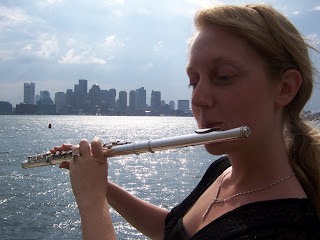
Aubrie Dionne is an author and flutist in New England. Her writings have appeared in Mindflights, Niteblade, Silver Blade, Emerald Tales, Hazard Cat, Moon Drenched Fables, A Fly in Amber, and Aurora Wolf. Her books are published by Entangled Publishing, Lyrical Press, and Gypsy Shadow Publishing. She recently signed her YA sci fi novel with Inkspell Publishing titled: Colonization: Paradise Reclaimed, which will release in November 2012. When she's not writing, Aubrie teaches flute and plays in orchestras. She's a big Star Trek TNG fan, as well as Star Wars and Serenity.
@authoraubrie
www.authoraubrie.com
http://authoraubrie.blogspot.com
A product of an illegal pairing, Eridani is the only woman without a lifemate aboard the colonization ship, the Heritage, and she is determined her less than perfect DNA will not get in the way of finding love. As the ship nears it's final destination of Haven 6 after five hundred years of travel, images of the surface show evidence of intelligent life on a planet that's supposed to be uninhabited. Commander Grier assigns Eri to the exploratory team to spy on the alien society and return with information on how to defeat them.
When Eri's team lands, tribes of humans attack and Eri is saved by Striver, the descendant of a colonist and a pirate from Old Earth's colonization efforts in other parts of the galaxy. Striver helps Eri rescue her team and they are drawn to each other despite their different allegiances. While Striver battles with trusting Eri, Eri must decide whether to warn him and his people about the commander's intentions, or follow orders and complete her mission.
add it on Goodreads:
http://www.goodreads.com/book/show/15777501-haven-6
Available soon on Amazon
Available Soon on Barnes and Noble:
http://www.barnesandnoble.com/w/haven-6-aubrie-dionne/1112767363?ean=9781937044855
She's also giving away this necklace.
You can enter the raffle here:
a Rafflecopter giveaway
Wednesday, August 29, 2012
Switched by Amanda Hocking
So I borrowed "Switched" by Amanda Hocking from the library. This is the first book in the trilogy that she self-published and everyone was talking about last year. I wanted to see what all the fuss was about.
I can see why the books were so successful; they are compelling to read. And they would appeal to the teenager/young adult demographic.
I can also see why agents passed on it. I had trouble feeling sympathetic to Wendy the main character. Then when I got to page 247, I stopped reading and skimmed to the end.
The story is that she is a trylle (troll) changeling who was switched at birth with a human child. When she was six years old, her mother tried to kill her. The story begins when the a Trylle tracker finds her to take her back to the Trylle.
In the Prologue (which is very well done as a Prologue), Wendy is six years old and at her birthday party. She is a total brat. She hates everything. She complains about every birthday present that she gets. Whine. Whinge. She goes into the kitchen where her human mother is cutting her birthday cake. It's chocolate. Wendy throws a temper tantrum because she hates chocolate and it's her birthday; she should have the kind of cake that she wants blahblahblah. Aaannnddd her human mother loses it and tries to kill her with the cake knife. Now let me say that I do not condone child abuse or hurting children in any manner. However, there is not a parent alive who in the same position would not have to exert a lot of self-control not to do what Wendy's mother did. Yes, the mother is a psychotic bitch from hell, and yes, she should not have tried to kill her daughter, but the kid is an unreasonable, irrational, BRAT. If I were in that situation, I would have to put the knife down, go outside and kick a tree or something, and I have the patience of a saint, so I don't have a whole lot of sympathy for the child character.
So the story begins and Wendy is 16. She is not so much a brat anymore, so she is somewhat likeable.
Then she gets to Forening where her trylle mother and the other trylle live. And nobody answers her questions. Nobody tells her anything about how the society works or what is and isn't allowed. Nobody tells her what is expected of her. And her mother yells at her and is nasty to her over all the mistakes she is making. In other words, all the adults are stupid and don't know enough to explain the cultural differences to her, even though all of them were changelings too and should know what she is going through. I got to page 247 and I couldn't take the adults are stupid to move the plot along thing any more, so I stopped reading and started skimming.
If you're a parent or an older adult, then you might have the same trouble with the story that I do. I think that teenagers and younger adults don't have the same problem with the story because they don't have the life experience to draw on that I do.
Amanda Hocking is a very talented writer, and while I won't read the rest of this series, I will check out her new series which is coming out soon.
I can see why the books were so successful; they are compelling to read. And they would appeal to the teenager/young adult demographic.
I can also see why agents passed on it. I had trouble feeling sympathetic to Wendy the main character. Then when I got to page 247, I stopped reading and skimmed to the end.
The story is that she is a trylle (troll) changeling who was switched at birth with a human child. When she was six years old, her mother tried to kill her. The story begins when the a Trylle tracker finds her to take her back to the Trylle.
In the Prologue (which is very well done as a Prologue), Wendy is six years old and at her birthday party. She is a total brat. She hates everything. She complains about every birthday present that she gets. Whine. Whinge. She goes into the kitchen where her human mother is cutting her birthday cake. It's chocolate. Wendy throws a temper tantrum because she hates chocolate and it's her birthday; she should have the kind of cake that she wants blahblahblah. Aaannnddd her human mother loses it and tries to kill her with the cake knife. Now let me say that I do not condone child abuse or hurting children in any manner. However, there is not a parent alive who in the same position would not have to exert a lot of self-control not to do what Wendy's mother did. Yes, the mother is a psychotic bitch from hell, and yes, she should not have tried to kill her daughter, but the kid is an unreasonable, irrational, BRAT. If I were in that situation, I would have to put the knife down, go outside and kick a tree or something, and I have the patience of a saint, so I don't have a whole lot of sympathy for the child character.
So the story begins and Wendy is 16. She is not so much a brat anymore, so she is somewhat likeable.
Then she gets to Forening where her trylle mother and the other trylle live. And nobody answers her questions. Nobody tells her anything about how the society works or what is and isn't allowed. Nobody tells her what is expected of her. And her mother yells at her and is nasty to her over all the mistakes she is making. In other words, all the adults are stupid and don't know enough to explain the cultural differences to her, even though all of them were changelings too and should know what she is going through. I got to page 247 and I couldn't take the adults are stupid to move the plot along thing any more, so I stopped reading and started skimming.
If you're a parent or an older adult, then you might have the same trouble with the story that I do. I think that teenagers and younger adults don't have the same problem with the story because they don't have the life experience to draw on that I do.
Amanda Hocking is a very talented writer, and while I won't read the rest of this series, I will check out her new series which is coming out soon.
Thursday, August 9, 2012
Another Take on the Usefulness of Social Media for self published authors
Ewan Morrison has an interesting article on The Guardian: Why Social Media Isn't the Magic Bullet for Self-epublished Authors.
There are some rather startling statistics like this one: A pizza joint in New Orleans hit 70,000 people with a Facebook ad and picked up ONE new customer. And this one: Only 70 self-epublished authors in the world in 2011 sold more than 800 ebooks a month.
If you want people to buy your book, then you need marketing techniques that are going to work. I think it's an interesting article and well worth your time to read and think about. You can find it here.
There are some rather startling statistics like this one: A pizza joint in New Orleans hit 70,000 people with a Facebook ad and picked up ONE new customer. And this one: Only 70 self-epublished authors in the world in 2011 sold more than 800 ebooks a month.
If you want people to buy your book, then you need marketing techniques that are going to work. I think it's an interesting article and well worth your time to read and think about. You can find it here.
Wednesday, July 18, 2012
Saturday, July 7, 2012
How Your Mind Cognizes Stuff
Consider the following sentences and get a picture in your mind of what is happening:
The man rowed the boat.
The girl put on her dance shoes.
The dog barked.
I just learned this while studying how the mind functions as determined by Buddhist scholars. What happens is you see or hear a word like "dog", and your mind goes and gets the image you have associated with the word dog and pops it into your conscious mind. The dog image will be different for everybody. This is true for everything that you cognize whether it is girl, boy, African-American, Asian, purple dragons, flighty faeries, and so on. It's automatic. There is no conscious thought involved.
This phenomenon is important for the writer when it comes to description. Recently I read a story with the MC driving a Porsche Cayenne. I know what a Porsche sports car looks like. I don't know what a Cayenne specifically looks like. So I grabbed the image of the porsche sports car. Then the author said that the MC was in an SUV... So I googled Porsche Cayenne and sure enough, it is an SUV.
And that is what the mind does when one reads. It reads a description and it grabs the closest image it has to that description and pops it into the consciousness. That is what one sees when one reads. To get the reader to see what you want them to see, you have to give them enough information to get the right image.
So going back to those three sentences at the beginning:
The man rowed the boat. I bet the image you pulled up looked something like this:
The girl put on her dance shoes. You probably saw shoes like this or something similar:
So if you have a person, place, or thing that you are describing in your fiction and it is not something that most people would be familiar with or not the norm, then you have to do a little more work to get your reader to see it. "Row" is not enough, I needed to say: the man sculled the racing shell. "Dance shoes" is not enough; I needed to say: the woman put on her latin style ballroom dance shoes. And dog is not enough; I needed to say: the Chinese crested dog barked.
And obviously that is the simple example to get my point across. If I was writing about a woman getting ready to go out ballroom dancing, then I could just write dance shoes. In context, the shoes would be ballroom shoes not ballet shoes.
Make sense?
The man rowed the boat.
The girl put on her dance shoes.
The dog barked.
I just learned this while studying how the mind functions as determined by Buddhist scholars. What happens is you see or hear a word like "dog", and your mind goes and gets the image you have associated with the word dog and pops it into your conscious mind. The dog image will be different for everybody. This is true for everything that you cognize whether it is girl, boy, African-American, Asian, purple dragons, flighty faeries, and so on. It's automatic. There is no conscious thought involved.
This phenomenon is important for the writer when it comes to description. Recently I read a story with the MC driving a Porsche Cayenne. I know what a Porsche sports car looks like. I don't know what a Cayenne specifically looks like. So I grabbed the image of the porsche sports car. Then the author said that the MC was in an SUV... So I googled Porsche Cayenne and sure enough, it is an SUV.
And that is what the mind does when one reads. It reads a description and it grabs the closest image it has to that description and pops it into the consciousness. That is what one sees when one reads. To get the reader to see what you want them to see, you have to give them enough information to get the right image.
So going back to those three sentences at the beginning:
The man rowed the boat. I bet the image you pulled up looked something like this:
I was talking about this:
The girl put on her dance shoes. You probably saw shoes like this or something similar:
I was writing about latin style ballroom dance shoes:
The dog barked. You might have seen a bulldog:
Or a golden retriever
I doubt you saw a Chinese Crested Dog:
So if you have a person, place, or thing that you are describing in your fiction and it is not something that most people would be familiar with or not the norm, then you have to do a little more work to get your reader to see it. "Row" is not enough, I needed to say: the man sculled the racing shell. "Dance shoes" is not enough; I needed to say: the woman put on her latin style ballroom dance shoes. And dog is not enough; I needed to say: the Chinese crested dog barked.
And obviously that is the simple example to get my point across. If I was writing about a woman getting ready to go out ballroom dancing, then I could just write dance shoes. In context, the shoes would be ballroom shoes not ballet shoes.
Make sense?
Tuesday, June 19, 2012
Glass Harp
Hey! Aubrie, Lindsey, and anyone else who loves Harry Potter or music, check out this amazing video:
I love youtube. I find the coolest and funniest things on there.
Monday, June 11, 2012
Ahoy, mates! There be Pirates Here!
There be pirates on the east coast of Florida! I have photographic evidence!
They're docked at Squid Lips a restaurant next to the library on the Indian River Lagoon.
I'm not entirely certain what the owner of the ship's deal is. The rumor is that he built the top part of the ship on top of a chris-craft boat. It looks real, but the sails and stuff don't work. It has an outboard motor on the back for when he moves it to a new location. He was giving kids a tour of the boat, and the library which is directly behind me taking this photo had a display of pirate books out for the kiddos.
And I got some great pics. :)
They're docked at Squid Lips a restaurant next to the library on the Indian River Lagoon.
I'm not entirely certain what the owner of the ship's deal is. The rumor is that he built the top part of the ship on top of a chris-craft boat. It looks real, but the sails and stuff don't work. It has an outboard motor on the back for when he moves it to a new location. He was giving kids a tour of the boat, and the library which is directly behind me taking this photo had a display of pirate books out for the kiddos.
And I got some great pics. :)
Tuesday, May 29, 2012
I joined Pinterest four weeks ago, and I love it. It's simple to use. I'm not limited to seeing only what my "friends" or "followers" post. I can follow any person that I want or just one or two boards that a person has. There's none of this friend request business, just click follow and that's all there is to it. And I can share my pins with anyone who isn't a member of Pinterest. You can go here to see my boards:
The amazing thing is that in the past month I have discovered over twenty artists whose works that I really love and that I would not have otherwise found. I love art. I love going to art shows and museums. When Google launched its Art Project, I was stoked as I could go and look at classic art and get closer, down to paint stroke level, than I ever could in a museum.
And then there is some amazing photography of the most beautiful places in the world and some really funny stuff. I found texts from the dog there.
BUT there are drawbacks to Pinterest. You have to have either a facebook account or a Twitter account to join. Most people have one or the other, but I would like to see them do away with that requirement and stand alone. It's also not the best place for having a conversation. While you can comment on pins and have a conversation about a specific pin, it's just not the best environment for having a discussion.
AND it is not the best place to market your books. If you're looking at it as potential place for building a platform for your writing, this is not the best place to do that. It is more visual, more for sharing of images, craft ideas, art, places, products, and for some reason tattoos.
However, a writer could use it to get ideas for stories or visual references for story descriptions like buildings, locations, clothes, furniture, and so on.
If you're interested, check it out here. You have to request an invitation to join, but that is relatively simple to do. Or leave a comment with your email address and I'll send you an invitation to join.
Updated to add: Pinterest is now open to anyone with an email account.
The amazing thing is that in the past month I have discovered over twenty artists whose works that I really love and that I would not have otherwise found. I love art. I love going to art shows and museums. When Google launched its Art Project, I was stoked as I could go and look at classic art and get closer, down to paint stroke level, than I ever could in a museum.
And then there is some amazing photography of the most beautiful places in the world and some really funny stuff. I found texts from the dog there.
BUT there are drawbacks to Pinterest. You have to have either a facebook account or a Twitter account to join. Most people have one or the other, but I would like to see them do away with that requirement and stand alone. It's also not the best place for having a conversation. While you can comment on pins and have a conversation about a specific pin, it's just not the best environment for having a discussion.
AND it is not the best place to market your books. If you're looking at it as potential place for building a platform for your writing, this is not the best place to do that. It is more visual, more for sharing of images, craft ideas, art, places, products, and for some reason tattoos.
However, a writer could use it to get ideas for stories or visual references for story descriptions like buildings, locations, clothes, furniture, and so on.
If you're interested, check it out here. You have to request an invitation to join, but that is relatively simple to do. Or leave a comment with your email address and I'll send you an invitation to join.
Updated to add: Pinterest is now open to anyone with an email account.
Sunday, May 27, 2012
Connected, But Alone
"Someday, I'd like to learn how to have a conversation." That's a quote from this TED talk.
As I listened to this talk, a scene from Real Genius kept popping into my head. The professor is lecturing in front of the classroom and in successive scenes the students leave tape recorders for the lecture instead of sitting in the class. Then in the last clip, there are no people. The student desks are all occupied by small tape recorders and on the teachers desk in the front of the classroom is a reel to reel tape recorder in place of the teacher.
Is that the kind of world we want to live in?
A challenge for you: Disconnect from the internet and phone for five minutes and enjoy a few moments of solitude.
Thursday, May 24, 2012
A Call for Literary Disarmament
I had this long post about the need for the writing community to cease the war of words. Nathan Bransford said it so much better, so I'll share this video of meerkats instead.
Monday, May 21, 2012
RIP Donna Summer and Robin Gibb
Last Thursday we lost the Queen of Disco, Donna Summer, and yesterday we lost one of the Brothers Gibb, Robin Gibb. Both battled cancer. Their songs were the soundtrack of my teenage years. It is sad to say so long to those who brought so much joy to my life with music that is fun to dance to.
The Bee Gees Saturday Night Fever album was the biggest selling album of all time until it got knocked off the top by Michael Jackson's Thriller. Check out this music video of Staying Alive. Yes, we dressed that way.
Donna Summer was 60 years old when she performed at The Nobel Peace Prize Concert in 2009, and she had the whole crowd on their feet. I guess Robin and Donna are having their Last Dance in the hereafter (whatever that means to you)
But I think maybe this song says it all:
RIP Donna Summer
RIP Robin Gibb
The Bee Gees Saturday Night Fever album was the biggest selling album of all time until it got knocked off the top by Michael Jackson's Thriller. Check out this music video of Staying Alive. Yes, we dressed that way.
Donna Summer was 60 years old when she performed at The Nobel Peace Prize Concert in 2009, and she had the whole crowd on their feet. I guess Robin and Donna are having their Last Dance in the hereafter (whatever that means to you)
But I think maybe this song says it all:
RIP Donna Summer
RIP Robin Gibb
Wednesday, May 9, 2012
Text From The Dog
Before you click on the link I must warn you of two things. 1) There is foul language, so if that kind of thing bothers you don't click on the link. 2.) Swallow whatever you're drinking, and you might wish to take a trip to the bathroom, so you don't wet your pants.
Text From the Dog.
I, of course, had to read today's post when I went to get the link for you...
Text From the Dog.
I, of course, had to read today's post when I went to get the link for you...
Wednesday, May 2, 2012
Branding
If you are a writer, then you need to read this article: The Paradoxical Secret of Obsession-Worthy Branding. It is the first and only article that I have read about branding that discusses how creative people can create their brand. Hint, it's not the same way as other businesses, because your selling an experience (reading a book) not a product.
A fascinating article.
Friday, April 20, 2012
How Do You Shop for Books?
I'd like your input. How do you shop for books? Before you started writing and joined the various online writing communities, how did you discover new authors to try out?
Robert Lee Brewer on his blog My Name is Not Bob has been having a platform building challenge for the month of April. I've been reading his posts everyday. And after arguing over the necessity of SEO, I started wondering how other people shop for books.
I go to the bookstore or the library and browse the shelves. First I check on whether my favorite authors have anything new out. If I don't have enough books in my arms, then I start looking at new to me authors. When a cover or title catches my eye, I pull it off the shelf and read the back blurb. If it sounds interesting, then I buy it or check it out.
I'm more likely to hear some buzz about a new book now, but even before I started hanging out with writers, if a book had buzz then I would check it out. I discovered Harry Potter through a newspaper article in the LA Times way back when.
To effectively market a book, you have to reach readers who are going to buy that book. So I am gathering information on book shopping habits. How do you shop for books? How do your friends and relatives shop for books?
Robert Lee Brewer on his blog My Name is Not Bob has been having a platform building challenge for the month of April. I've been reading his posts everyday. And after arguing over the necessity of SEO, I started wondering how other people shop for books.
I go to the bookstore or the library and browse the shelves. First I check on whether my favorite authors have anything new out. If I don't have enough books in my arms, then I start looking at new to me authors. When a cover or title catches my eye, I pull it off the shelf and read the back blurb. If it sounds interesting, then I buy it or check it out.
I'm more likely to hear some buzz about a new book now, but even before I started hanging out with writers, if a book had buzz then I would check it out. I discovered Harry Potter through a newspaper article in the LA Times way back when.
To effectively market a book, you have to reach readers who are going to buy that book. So I am gathering information on book shopping habits. How do you shop for books? How do your friends and relatives shop for books?
Subscribe to:
Posts (Atom)


